Acknowledgement of Country
The Psychotherapy and Counselling Federation of Australia acknowledges the Wurundjeri Woi-wurrung people of the Kulin nations as the traditional custodians of the land on which our head office is located. We acknowledge all traditional custodians across Australia and pay respect to Elders, past and present. We honour their continuing connection to culture, land, waters, seas, knowledge and community; sovereignty was never ceded. We pay respect to all First Nations Peoples and communities across Australia and throughout the world.
About Us
Welcome to the College of Indigenous Healing Practices (CIHP), a sacred space dedicated to honouring and advancing the diversity of First Nations healing practices within Australia and globally.
Established in October 2019 under former name, College of Aboriginal and Torres Strait Islander Healing Practices (CATSIHP), as part of the Psychotherapy and Counselling Federation of Australia (PACFA), we are committed to nurturing the self-determination, sovereignty and cultural integrity of Indigenous peoples.
Behind Our Logo
The guiding philosophy for the logo design is centred on First Nations cultural values, healing practices, principals and wisdoms. The 3 circles represent inter-generations; birth and rebirth and the connections and spiritual tethers to our kin, ancestors and future generations at a micro and macro level.
The circles are encapsulated within a healing stone, showing our connection to mother earth; her energies and acknowledging her as our provider and teacher. They represent the links between past, present and future, the energies flow from and to one another, showing all cause and effect. The circles (camps) depict community coming together to observe, learn, share and heal.
Artwork by Dixon Patten, Yorta Yorta and Gunnai artist, Bayila Creative.
Our Purpose
We are dedicated to cultivating a skilled and qualified workforce of Indigenous Healing Practitioners who carry the wisdom of their ancestors, qualifications, and contemporary knowledge alike.
By nurturing and advancing Indigenous Healing Practices, we honour the sacred connection to land, spirit, and community.
In 2021, the former College of Aboriginal and Torres Strait Islander Healing Practices launched the Indigenous Healing Practices Training Standards. These standards articulate the foundational requirements for registered Indigenous Healing Practitioners, International Indigenous Healing Practitioners, and accredited training programs.
Why Join the College of Indigenous Healing Practices
Our Vision
At CIHP, we envision a future where collaborative dialogue and meaningful relationships flourish.
We strive to uplift and respect the deep significance of Indigenous healing practices, ensuring they are woven into the fabric of holistic care and community well-being.
Our Aim
The College seeks to support, develop, and accredit Indigenous Healing Practices. We facilitate the growth and delivery of accredited programs grounded in cultural wisdom and ancestral knowledges.
Our goal is to create pathways that enhance access to Indigenous healers and practitioners, fostering mental health and healing within Indigenous communities.
College Benefits
- A culturally safe environment where the intersection of First Nations approaches and Western approaches are discussed.
- Connect with therapeutic practitioners who incorporate a variety of culturally integrated approaches in their work.
- Benefit from CIHP’s advocacy by First Nations peoples for First Nations peoples, raising awareness of our specialist skills, knowledge, and experience.
- Gain access to Indigenous Healing Practices PD and CPD, including mentorship from First Nations leaders.
Join the College
Please review the
Application Journey
and the
CIHP FAQ’s
for any questions you may have.
Please note, an application fee is payable for CIHP membership applications. For current application fee costs, please refer to the Schedule of Fees. Once your application is received, you will be sent a confirmation email with a link to pay the application fee.
For membership into the College of Indigenous Healing Practices, you are required to submit the following documentation. Please click each heading for more information:
Membership Application Form
Ensure that you have read through the questions carefully before completing the application form. Any incomplete forms will be returned to the applicant. If you need any assistance with the application form, please contact the College and Projects Office at
[email protected].
Two Letters of Support
As part of the accompanying documentation for membership into CIHP, you must provide letters of support from two well-known and well-respected First Nations Elders of your community, or the community you live in.
The letters of support can be formal or informal; however, they must include and address the below information provided by the person writing the letter of support.
- The applicant’s name
- The approximate amount of time you have known the applicant
- The community name(s) in which the applicant is involved
- The applicant's level of commitment and involvement in the community
- The supporter’s name, mob (where applicable), and contact details
Letters must be from an Elder from a community you have supported and been involved with for over a year. Previous letters (within 5 years) can be reused if they meet the requirements. If over 5 years old, include in your Statutory Declaration that you have an ongoing relationship with the supporter.
Statutory Declaration or Equivalent
As part of your application for CIHP membership, you must submit a Statutory Declaration confirming your First Nations status.
If you are unsure of what is meant by First Nations status, refer to the factsheet provided by the
United Nations: Who Are Indigenous Peoples?
A Statutory Declaration is a formal written statement that a person signs and declares to be true before an authorised witness. Equivalent documents in other countries include sworn affidavits or declarations under oath.
See examples:
- New Zealand: Oaths and Declarations Act
- Canada: Commissioners for Taking Affidavits Act or Canada Evidence Act
- United States: Sworn Declaration or Affidavit
- South Africa: Affidavit
- India: Affidavit
- Germany: Versicherung an Eides statt
- France: Attestation sur l’honneur
- Japan: 陳述書 (Chinjutsusho)
If you reside in Australia, use the Commonwealth Statutory Declaration form available from the Attorney-General’s Department.
Filling Out Your Declaration
As part of your application, please include the following statements:
Step 1: Identity
- I identify as an Australian First Nations person as outlined in the UN Fact Sheet on Indigenous peoples, OR
- I identify as an International First Nations person as outlined in the UN Fact Sheet on Indigenous peoples.
Step 2: Community Recognition
- I am recognised as such by the [insert specific community or communities].
Step 3: Descent
- I am a descendant of an Australian First Nations person, OR
- I am a descendant of an International First Nations person.
Key Features of Indigenous Healing Practices
Indigenous
Healing
Practices
Deep Listening
Relationships
Connection to Country
Culture
Family and Community Healing Focus
Mind, Body, Emotions
Indigenous Pedagogies
Spirituality
Read our Latest Articles
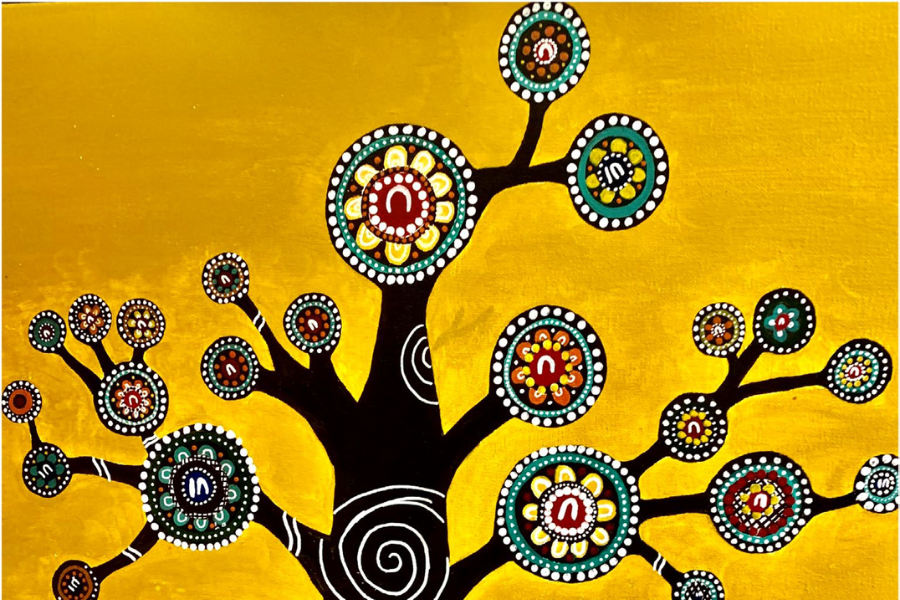
Revisiting Genograms: First Nations Wisdoms
This paper reimagines the traditional genogram for First Nations family therapy students, incorporating Country, community, spirituality, story and artwork. It proposes a more culturally meaningful approach that honours Indigenous ways of knowing while maintaining the genogram's systemic foundations.
Read More

Contributions From Aboriginal Australian Psychology: Songlines, Memory, and Relational Knowledge Systems
This article explores how memory and knowledge are embedded in Aboriginal songlines, landscapes, and relational systems — showing that human cognition is deeply connected to culture and Country. It highlights Indigenous systems of remembering that pre-date and inform Western mnemonic approaches.
Read More

Healing the Psychic Misery of Aboriginal People in Mparntwe (Alice Springs): Who Is Best Placed to Do This?
This article examines the psychic pain experienced by Aboriginal men in Mparntwe (Alice Springs) and argues for healing approaches led by Aboriginal knowledge holders. It advocates for narrative-based and community-grounded therapeutic practices that reflect lived cultural experience.
Read More

Guest Editorial: Trauma Transported; Trauma Transformed
Judy Atkinson reflects on how intergenerational trauma among Aboriginal peoples can be transformed through culturally grounded healing practices that reconnect individuals and communities with ancestral strength and resilience.
Read More
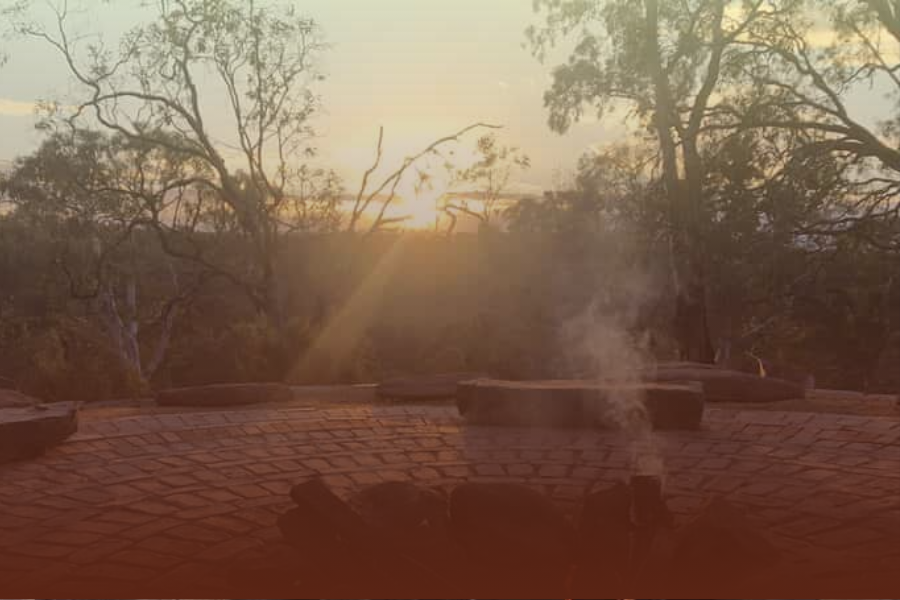
Gudu-Guduwa: Healing Disconnection Through Incorporating Bush and Animal-Assisted Therapies Into Therapeutic Practice — A First Nations Reflection
A First Nations woman and Allied Health professional explores her experience including how she incorporates Indigenous healing knowledges through bush and animal-assisted therapies into her private practice.
Read More
.png)
Reflecting on Contesting and Presenting History With a Focus on the Impacts in the Present
The persistence of views of historical massacres as past fringe events institutes a discontinuity between past and present, overlooking the link between these events and current-day outcomes for Indigenous Australians.
Read More
CIHP CPD
Diversity in Practice: Indigenous Healing Practices Workshop
College of Indigenous Healing Practices | June 26, 2024
The Diversity in Practice Workshop brought together leading practitioners and researchers in Indigenous healing to share knowledge, lived experience, and innovative community interventions.
The following is a summary of the key speakers and their contributions.
Emeritus Professor Judy Atkinson
The development of We Al-li. We (fire anger) - Al-li (water grief)
JudyKaye Knox
Response to community needs in Tennant Creek
Tod Stokes and Bianca Stawiarski
Sharing stories toward healing: Learnings from a collaborate approach.
Gina O’Neill and Kylie Miles
Kids Caring for Country Program
Associate Professor Caroline Atkinson
Therapeutic Responses to the Northern Rivers regions floods.
Rayleen Councillor
Code Switching
Dr. Gavin Morris
Applying the Ancient University
To watch the Diversity in Practice: Indigenous Healing Practices Workshop recording,
Our Leadership
CIHP is guided by a dedicated Leadership Group, convened by Bianca Stawiarski and Elder Emeritus Professor Judy Atkinson.
Together, they bring a wealth of experience and a passionate commitment to advancing Indigenous healing practices not just in Australia, but across the globe.
Join us as we walk together on this journey of healing, relational connection, and recognition of ancestral practices combined with clinical qualifications. Let us honour the past while building a brighter, more inclusive future for all communities.
Meet our Patron
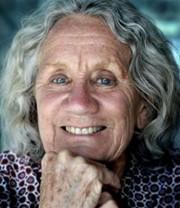
Emeritus Professor Judy Atkinson (Elder)
Emeritus Professor Judy Atkinson is a Jiman (central west Queensland) and Bundjalung (northern New South Wales) woman, with Anglo-Celtic and German heritage. Her academic contributions to the understanding of trauma related issues stemming from the violence of colonisation and the healing/recovery of Indigenous peoples from such trauma has won her the Carrick Neville Bonner Award in 2006 for her curriculum development and innovative teaching practice. In 2011 she was awarded the Fritz Redlick Memorial Award for Human Rights and Mental Health from the Harvard University program for refugee trauma. Her book ‘Trauma Trails – Recreating Songlines: The transgenerational effects of trauma in Indigenous Australia’, provides context to the life stories of people who have been moved from their country in a process that has created trauma trails, and the changes that can occur in the lives of people as they make connection with each other and share their stories of healing.
Meet our Leadership Group
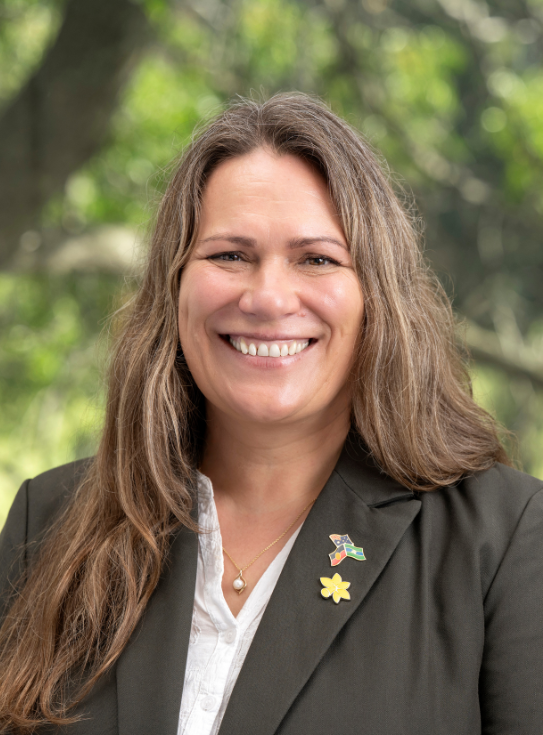
Bianca Stawiarski (Convenor)
Bianca Stawiarski, a proud Badimia and Ukrainian woman, is a centred and purpose-driven healer, mental health and Indigenous Healing practitioner, facilitator, coach, international co-author, author, change maker and speaker. She is a PACFA Mental Health Practitioner whose qualifications include a Masters in Counselling Practice, Diploma of Life Coaching, Post grad. Diploma of Counselling, Certificate in Equine Assisted Psychotherapy, and Bachelor of Aboriginal studies. Bianca is also currently a PhD candidate with Batchelor Institute of Indigenous Tertiary Education.
Bianca is the founder of Warida Wholistic Wellness, and BilaEmpower. She's dedicated to healing through a First Nations lens, improving mental health, Indigenous Healing practices and economic empowerment through entrepreneurship. Her approach integrates her innate Indigenous knowledge, knowledge of healing combined with entrepreneurship to empower women and communities. Bianca is recognised for her work in shifting away from western medical models of dysfunction, instead focusing on healing outside of four walls. Part of this approach embraces the ethos of: gudu-guduwa (coming together) through ngardi Guwanda (listening, feeling, thinking strongly), relationship, and connection.
Bianca's PhD research explores whether a local community-led circular research model can positively contribute to the outcomes of women's empowerment programs for entrepreneurship. Bianca hopes that the outcomes from her 'We hold our own Answers' research will empower First Nations communities to choose their own paths. A published author and international multiple award-winning entrepreneur, she's committed to creating community change.

Gina O’Neill (she/her)
Gina is a descendant of Ngāti Kahungunu, Rangitane (Aotearoa, NZ), Ireland and Germany, currently living and working on unceded Eora and Bundjalung lands in Australia. Gina is a PACFA-registered clinical psychotherapist, educator and supervising consultant (Master Gestalt Therapy, Grad Dip Couns., Cert. Ecotherapy and B App. Soc Sci). She has 20 years clinical experience supporting individuals, families and groups presenting with substance and process addictions, mental health, relationship issues and other trauma-related experiences. Gina has worked in private psychiatric clinical settings, NGOs and public health settings as a therapist and clinical manager and in the past 8 years as a supervisor, lecturer/trainer, clinical specialist in the Aboriginal Community Controlled Health Organisation sector and is in private practice. She is currently a member of the PACFA College of Aboriginal and Torres Strait Islander Healing Practices (CATSIHP) and member of the PACFA research committee. She has completed studies in working with trauma, Indigenous models of care and recently ecotherapy. As Gina is a NZ Māori woman, her interest is in growing her Indigenous healing practice informed by Te Ao Māori in reciprocity with the natural world, and the intersection with gestalt psychotherapy to support connection and healing of the relationship with people and our environment.
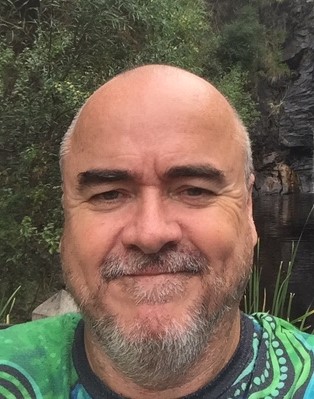
Tod Stokes (Affiliate member)
Tod has extensive experience in supporting behaviour change in men impacted by trauma, that use violence. He is a highly experienced Indigenous Healing Practitioner, who currently is Academic Co-Lead, First Nations Education and Engagement School of Psychology for the University of Adelaide. As a trauma-informed / Culturally integrated counsellor, Tod specialises with clients who have shown a propensity to use violence in their daily struggle with the rules and regulation imposed by mainstream society. Tod makes a huge impact in this role through supporting his clients to be more open with their emotions and to embrace their Cultural roots. Tod holds a Diploma in Mental Health and a Diploma of Narrative Approaches for Aboriginal People.
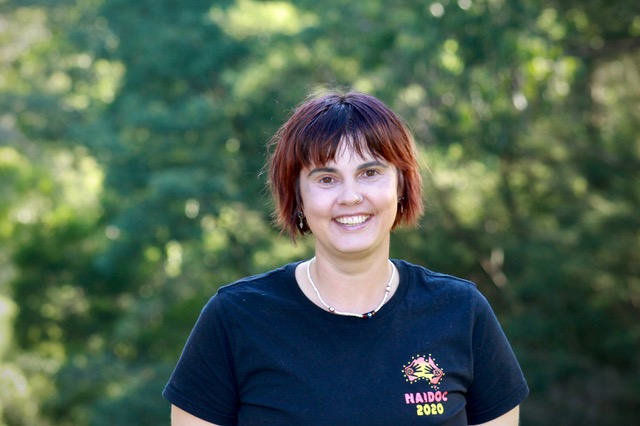
Michelle Rosemary Maxwell
Counsellor | Aboriginal Practitioner | Community Educator | Leader
Michelle is a Koori woman whose family has had four generations grow up on Wurundjeri Country. She is a mother of two and brings her lived experience, community responsibility and relational values into her leadership and professional practice. Michelle’s work is guided by accountability to community, care for future generations and a commitment to working in ways that do not cause further harm. Michelle is an Aboriginal counsellor, community educator and Principal Aboriginal Adviser with extensive experience across trauma-informed practice, conflict resolution, family violence, disability and community services. She has over a decade of experience supporting individuals, families, teams and organisations experiencing relational conflict, psychological distress and the impacts of systemic and interpersonal harm
Her clinical practice is integrative and evidence-informed, with a strong focus on conflict resolution that addresses communication breakdown, power imbalance and relational harm. Michelle supports clients to develop emotional regulation, reflective capacity, boundary setting and pathways for repair, while prioritising safety and minimising re-traumatisation. Her work is grounded in anti-oppressive practice, attending to the ways systems, policy and structural inequities shape lived experience, wellbeing and conflict. Michelle’s therapeutic approach draws on narrative therapy, trauma-informed frameworks, reflective practice and Indigenous ways of knowing, being and doing. She applies these approaches within clear ethical and professional boundaries, supporting client autonomy, informed consent and accountability.
In addition to direct practice, Michelle is the founder of Violet Dreaming, a First Nations-led practice providing counselling, supervision, training and professional education. She designs and delivers workforce development focused on anti-oppressive practice, conflict-responsive systems and ethical service delivery across community and government sectors. Michelle also contributes to curriculum design and teaching within the community services sector, advocating for decolonising and justice-centred education.