What Does the Research Committee Do?
.png)
The PACFA Research Committee exists to make research in Counselling, Psychotherapy and Indigenous Healing Practices more accessible, achievable, and connected to everyday practice.
We want our sector to have a stronger body of evidence, and we recognise that many practitioners and emerging researchers face real barriers to getting involved. Research can feel distant, complex, and out of reach. Our focus is on changing that.
As part of PACFA’s broader commitment to advancing the profession, we work to create practical pathways for people across the field to engage in research, whether you are an experienced academic, a practitioner with a question about your work, or someone just starting out. This includes supporting practitioner-led research, building confidence and capability, and opening up opportunities to contribute to the evidence base that underpins our profession.
We do this by:
- Supporting accessible entry points into research for practitioners and students
- Facilitating and funding high-impact research projects
- Connecting clinicians, educators, and researchers across the sector
- Promoting publication, dissemination, and real-world application
- Sharing information to the profession about contemporary and evidence-informed practices
At its core, our work is about enabling more people to ask meaningful questions, and to have the support, structure, and opportunities to pursue them. Initiatives such as seed funding, mentorship, and publication pathways are designed to help turn ideas into contributions that strengthen both practice and the profession as a whole.
We are also part of the Psychotherapy and Counselling Journal of Australia (PACJA) - PACFA’s peer-reviewed, open access journal - and committee members support the development, publication, and visibility of research across the profession via this medium.
You don’t need to be a seasoned academic researcher to get involved. If you are curious about your practice, interested in contributing to the future of the profession, or want support to take the next step, we are here to help.
Get Involved
Join us in building a more active, inclusive, and practice-connected research culture, one that reflects the depth and diversity of counselling and psychotherapy in Australia.
Terms of Reference
Download the Research Committee Terms of Reference.
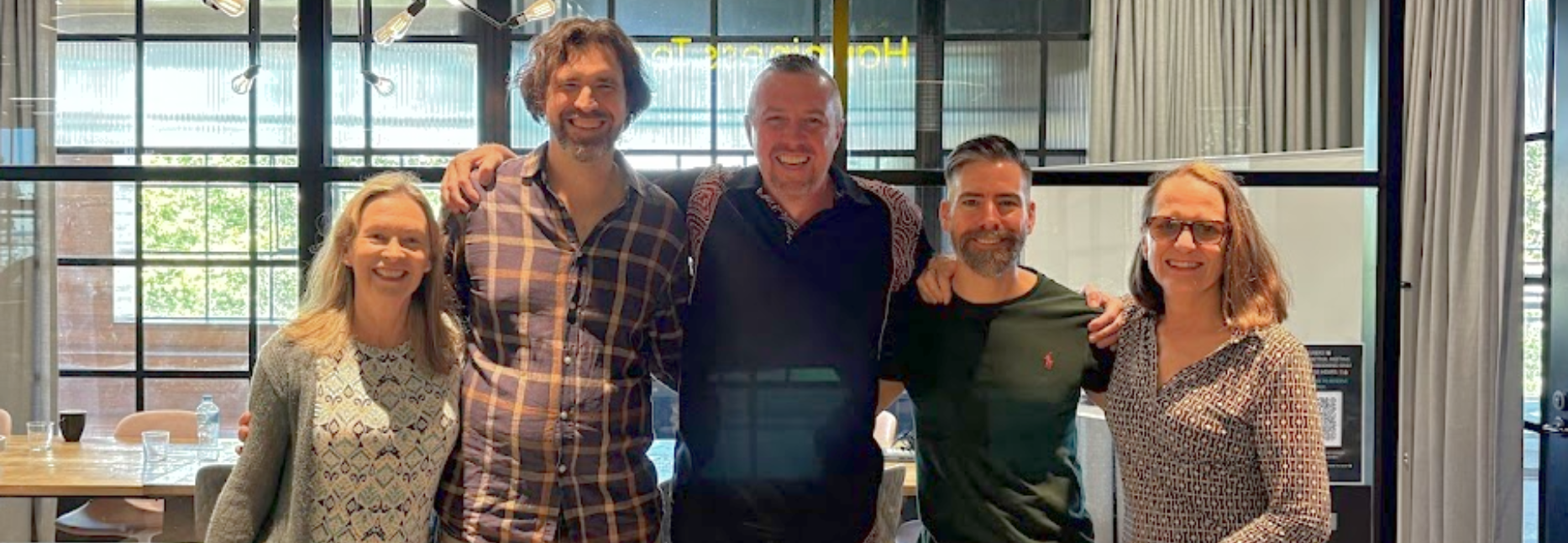
Left - right: Jane Marsden, Jim Schirmer, Adrian Holmes, Alessandro Digiacomo and Jules F.B Silva. Missing: Alexandra Bloch-Atefi
Psychotherapy and Counselling Journal of Australia (PACJA)
The Psychotherapy and Counselling Journal of Australia (PACJA) is an international, peer-reviewed,
and open access scholarly journal which aims to make original and significant contributions to
evidence-informed theory, policy, and practice for psychotherapy, counselling, and Aboriginal and
Torres Strait Islander healing practices. The official e-journal of the Psychotherapy and Counselling
Federation of Australia (PACFA), it is an initiative of the PACFA Research Committee.
Read our Latest Articles

Communicative Musicality and Its Relevance to Psychotherapy and Counselling
This article explores how communicative musicality shapes therapeutic dialogue, reviewing literature across
disciplines and proposing a framework for understanding the implicit musical dimensions of speech and relational
rhythm in therapy.
Read More
.png)
Mentalisation, Self-Compassion, and the Psychosocial Impact of ADHD in Adult Women
This study revealed that self-mentalisation and self-compassion significantly influence the psychosocial impact of
attention-deficit/hyperactivity disorder (ADHD) in adult women, offering promising directions for targeted
therapeutic interventions.
Read More
Resources
Review of the Social and Emotional Wellbeing of Indigenous Australian Peoples
A comprehensive review examining the social and emotional wellbeing of Aboriginal and Torres Strait Islander peoples,
providing evidence-informed insights for practitioners and policymakers.
Review of the Harmful Use of Alcohol Amongst Indigenous Australians
An evidence-based review exploring patterns, impacts, and responses to harmful alcohol use among Indigenous Australians.
Correlates of Reported Gambling Problems in the CALD Population of Australia
Research examining the social, cultural, and psychological factors associated with reported gambling problems
in culturally and linguistically diverse communities.
Journal of Counselor Leadership and Advocacy – Free Article Access
Free access to a selection of articles from Volume 2, Issue 2 of this journal, offering evidence-based
recommendations on leadership, advocacy, professionalism, and scholarship in counselling.
2015 Art Therapy – Free Article Collection
A curated collection of over 65 free articles from arts and creative therapies journals, supporting
research-informed creative practice. (Free access previously available until 30 June 2016.)
DSM-5 Part Two – Article Collection
A research collection related to DSM-5 topics including addiction, autism, personality disorders,
depression, and other key areas of mental health practice.
Apply for a Research Grant
The PACFA Research Committee invites researchers across Australia to contribute to a groundbreaking project that highlights the unique value of counselling and psychotherapy in supporting mental health. This initiative aims to build a robust evidence base demonstrating the profession’s impact and distinct benefits.
There is a total funding pool of $20,000 available to distribute to the right projects. Suggested research areas include counselling as preventative care, public perceptions of the profession, cost-effectiveness, learning outcomes in accredited programs, tailored approaches for diverse populations, trauma-informed practices, and integration into primary care settings.
The project is structured in phases:
1. Proposal Phase: Submission invitations are open now.
2. Initial Research Phase: 1–3 projects commence within six months.
3. Ongoing Research Phase: Additional projects launch within the first year.
4. Completion Phase: Findings are published and integrated into a larger evidence base.
Watch the Recorded Webinar
Proposals must align with PACFA’s definitions of counselling and psychotherapy. For submission details, please hit the links below or contact the research committee via email.
How to apply
Research Grant applications will open on 10/03/2026. Please note that applications cannot be submitted before this date.
Applications will close 31 May 2026.
If you have any questions, please contact [email protected]
Frequently Asked Questions (FAQs)
Q. Do I need to be a PhD student to apply?
A: No. Anyone with a strong, relevant research idea can apply. You don’t need to be enrolled in a PhD.
Q: Is a Master of Counselling required?
A: No, a Master of Counselling is not specifically required. Applicants should have relevant tertiary-level training in counselling, psychotherapy, or a related field. PACFA-accredited training is preferred but not essential.
Q: Can the project be part of a PhD or another external project?
A: Yes, it can. Projects that are part of a PhD or other external research are welcome, as long as they make a timely and broad contribution to the counselling and psychotherapy evidence base. However, applicants should be mindful that PACFA is seeking research that can produce outcomes within a reasonable timeframe. For example, a project at the very beginning of a PhD may not be suitable.
Q: Can I apply if I don’t have a project idea but want to be involved?
A: Yes. While PACFA doesn’t match researchers, you can connect with others through professional networks and social media.
Q: Is a mentor/supervisor required or provided?
A: You’ll need to arrange your own, but PACFA can provide general guidance.
Eligibility & Membership
General Advice
- Ensure your project clearly aligns with PACFA’s mission and the advancement of counselling and psychotherapy practice.
- Demonstrate feasibility within the funding scope and timeframe.
- Highlight potential impact, including contribution to practice, policy or future research.
- Strengthen the evidence base, informing practice or enhancing the visibility and credibility of counselling and psychotherapy.
Q: What level of PACFA membership is required to apply?
A: Applicants must be PACFA registrants. This level of membership is sufficient to meet eligibility requirements.
Q: Do I need a supervisor for this project?
A: A supervisor is not strictly required; however, appropriate research governance, support and oversight should be demonstrated within the application, particularly for early career researchers.
Q: Can research involve professionals from other disciplines, or must it focus solely on Registered Clinical Counsellors?
A: Research is not limited to Clinical Registrants. It may include professionals from other disciplines, but the project must clearly focus on counselling and psychotherapy practice and demonstrate relevance to PACFA’s scope.
Research Scope & Types
Q: What kind of research are you looking for?
A: A wide range is welcome, including qualitative, quantitative, feasibility, and intervention studies.
Q: Is it okay to explore a particular counselling modality?
A: It’s absolutely appropriate to explore a specific counselling modality, particularly in the context of how it’s applied in real-world settings. The key is that PACFA isn’t focused on comparing or evaluating specific modalities against each other (e.g. CBT vs ACT), but rather on demonstrating the overall value of counselling and psychotherapy, especially in contrast to other allied professions.
Intervention or feasibility studies are encouraged if they aim to show:
- The effectiveness of counselling in particular settings (e.g. schools, primary care, community centres)
- How counselling contributes to client wellbeing
- The feasibility of integrating counsellors into multidisciplinary teams
- Client engagement or satisfaction with counselling services
- The preventative impact of counselling on mental health outcomes
These kinds of studies align strongly with PACFA’s goal to build a robust evidence base that showcases the distinct role and benefit of counselling and psychotherapy in supporting mental health and wellbeing.
Q: Can the research involve human participants?
A: Absolutely. Human studies are encouraged - just ensure ethical approval is obtained.
Q: Are you looking for large-scale studies?
A: No specific size required. The study should be feasible, impactful, and achievable within the grant budget.
Q. Is there a required length for the completed research project?
A: No. There is no specified page limit; however, the scope and outputs should be appropriate to the scale of the funding and clearly articulated in the proposal.
Q. Can I trial a new strategy for gathering local data as a precursor to a national project?
A: Yes. Pilot or feasibility studies are encouraged, particularly where they demonstrate potential for scalability or future national impact.
Q. How should my research contribute to the counselling and psychotherapy profession?
A: Applications should clearly demonstrate how the proposed research adds value to the counselling and psychotherapy profession. This may include strengthening the evidence base, informing best practice, or enhancing the visibility, credibility and recognition of the profession within broader health, education and policy contexts.
Q. How should my research contribute to the counselling and psychotherapy profession?
A: Applications should clearly demonstrate how the proposed research adds value to the counselling and psychotherapy profession. This may include strengthening the evidence base, informing best practice, or enhancing the visibility, credibility and recognition of the profession within broader health, education and policy contexts.
Examples of suitable research topics:
Q. Would research on AI in psychotherapy (e.g., moral injury, ethical distress, deskilling) be considered relevant?
A: Yes. This is a timely and relevant area, provided the proposal clearly articulates its implications for counselling and psychotherapy practice.
Q. Would research on counselling outcomes for people with early dementia be considered?
A: Yes. Projects examining the effectiveness of counselling interventions in specific populations, including people living with dementia, are relevant where they align with counselling and psychotherapy practice.
Q. Can I investigate practitioner qualities (e.g., vulnerability, authenticity) across professions?
A: Yes. Comparative or exploratory research into practitioner qualities is appropriate, particularly if it contributes to understanding therapeutic practice and outcomes.
Q. Would a PhD-related project (e.g., midlife wellbeing, psychotherapy-informed frameworks) be suitable?
A: Potentially. Applicants may submit a discrete phase of a larger research program, provided it is clearly defined, feasible within the grant scope and aligned with PACFA priorities.
Timelines and Process
Q: What’s the project timeline once approved?
A: It depends on the project, but timely completion is expected.
Q: When will grant decisions be announced?
A: Likely within 2–3 months after submission closing.
Q: How do I apply?
Q. Do I need to be a PhD student to apply?
A: No. Anyone with a strong, relevant research idea can apply. You don’t need to be enrolled in a PhD.
Ethics, IP, and Contracts
Q: Who provides ethics approval?
A: Your institution’s Human Research Ethics Committee (HREC). PACFA cannot approve ethics.
Q: Can PACFA help with the ethics process?
A: Yes, general guidance can be provided, but you must apply through your institution or the HREC.
Q: Will there be a contract?
A: Yes, a grant agreement will cover deliverables, IP, timelines, and reporting.
Q: Who owns the research?
A: Ownership is shared between the researcher(s) and PACFA.
Funding & Deliverables
Q: Who owns the research?
A: Ownership is shared between the researcher(s) and PACFA.
Q: How much funding is available?
A: $3,000–$5,000 per project.
Q: Do I need to submit a budget?
A: Yes, a basic budget estimate is required.
Q: What can the funding be used for?
A: Funding may be used for research-related expenses such as:
- Data collection and analysis
- Research assistance
- Participant recruitment or incentives
- Transcription or software
- Dissemination (e.g., reports, publications, presentations). All proposed expenses should be justified and directly related to the project.
Q: Can PACFA funding support one phase of a larger, multi-stage project?
A: Yes. A phased approach is acceptable. Subsequent phases may be funded through other sources, though this may require discussion or negotiation depending on the proposal.
Publishing & Research Outcomes
Q: Can funds be used for time, materials, or analysis?
A: Yes, funding should reflect all costs involved in delivering the project.
Q: Can I publish my research?
A: Yes, ideally in PACJA (PACFA’s journal), but you’re not limited to this.
Q: Will PACJA have a special edition for this?
A: Possibly, but this has not been confirmed yet.
Q: Who reviews or checks the integrity of the final research?
A: PACFA’s Research Committee, PACFA and peer review (e.g. journal publication).
Q: Is there a way to connect with others for collaboration?
A: No formal directory yet, but researchers can reach out via professional networks, universities, or PACFA channels.
Collaboration & Networking
Q: Is there a way to connect with others for collaboration?
A: No formal directory yet, but researchers can reach out via professional networks, universities, or PACFA channels.
Definitions & Guidance
Q: Where can I find PACFA’s definition of counselling and psychotherapy?
A: PACFA’s definitions are available on the PACFA website and should be consulted to ensure alignment with the profession’s standards and scope.
Evidence-Informed Practice Statement
Purpose of this statement
This statement has been developed to support the professionalism of PACFA, by positioning the organisation and its
members in the contemporary paradigm of professional practice that is underpinned by evidence. It informs potential
funders and employers about PACFA’s position with respect to evidence use amongst psychotherapists and counsellors, and
advises members of PACFA’s recommendations for their practice.
Definition of Evidence-Informed Practice
PACFA defines Evidence-Informed Practice as an approach to practising psychotherapy and counselling that is informed by
current theory, empirical research evidence and expertise from clinical practice, which reflects the impact of client
characteristics, including culture, life experience and preferences, on treatment outcomes.
PACFA’s commitment to Evidence-Informed Practice
PACFA is committed to advancing evidence about the effectiveness of psychotherapy and counselling and its use in
professional practice. Through its diverse activities, from Continuing Professional Development (CPD) to publication of
the peer-reviewed journal PACJA, and other research publications including systematic reviews, PACFA seeks to promote
evidence-informed practice.
PACFA also strongly encourages all of its members to prioritise evidence-informed practice, both organisations and
individuals who offer training or CPD, and practitioners. PACFA recommends the use of appropriate standardised outcome
measures by practitioners, to ensure that they receive systematic feedback on the effectiveness of their services, and
the systematic use of this feedback to improve practice.
Background to this statement
Evidence-Informed Practice is a term increasingly applied to approaches that draw from evidence from both scientific
research and quality reflective practice (Dodd & Savage, 2016). While development of the evidence base for
psychotherapy and counselling has earlier been influenced by the science-practitioner model of clinical psychology,
more recently, Common Factors (CF) research has altered the landscape in supporting the integration of the
science-practitioner with reflective-practitioner models (Day, 2015).
These Common Factors can be categorized broadly as client factors and extra therapeutic events, relationship factors,
expectancy and placebo effects and technique/model factors, with the latter contributing only 15% of impact (Asay &
Lambert, 1999; Wampold, 2015).
PACFA acknowledges that a current lack of empirical evidence for any specific psychotherapy and counselling approach or
intervention does not mean that it is necessarily ineffective or inappropriate. The increasing evidence on Common
Factors overrides past reliance on technique or modality as major factors in therapeutic effectiveness. Rather, the
evidence showing equivalence of effect justifies an assumption of effectiveness for “bona-fide” approaches (Wampold,
1997) as a starting point. PACFA has chosen to use the term Evidence-Informed Practice for these reasons and because it
is considered to be more compatible with the full breadth of research approaches that are valued in our field,
including Indigenous methodologies, inclusive research approaches and case study research.
References
-
Asay, T. P., & Lambert, M. J. (1999). The empirical case for the common factors in therapy: Quantitative
findings. In M. A. Hubble, B. L. Duncan, & S. D. Miller (Eds.), The heart and soul of change: What works in
therapy (pp. 23-55). Washington, DC, US: American Psychological Association.
http://dx.doi.org/10.1037/11132-001.
-
Day, E. (2015). Psychotherapy and counselling in Australia: Profiling our philosophical heritage for therapeutic
effectiveness. PACJA, 3(1). ISSN: 2201-7089.
-
Dodd, S. & Savage, A. (2016). Ethics and Values, Research and Evidence-Based Practice, Social Work Profession.
DOI: 10.1093/acrefore/9780199975839.013.91.
-
Lambert, M. (2015). The therapeutic alliance: An evidence-based guide to practice. Psychotherapy Research,
26(2):1-2. DOI: 10.1080/10503307.2015.1031200. Sackett D et al. 2000, Evidence-Based Medicine: How to Practice
and Teach, 2nd edition. Churchill Livingstone, Edinburgh, p. 1
-
Wampold, B. (1997). A Meta-Analysis of Outcome Studies Comparing Bona Fide Psychotherapies: Empirically, “All Must
Have Prizes”. Psychological Bulletin, 122(3):203-215. DOI: 10.1037//0033-2909.122.3.203.
-
Wampold, B. (2015). How important are the common factors in psychotherapy? An update. World Psychiatry, 4(3),
270-277. https://doi.org/10.1002/wps.20238.
Contributors
- Chair, Dr Kim Dunphy, Research Fellow, Creative Arts and Music Therapy Research Unit, University of Melbourne, Victoria
- Dr Alexandra Bloch-Atefi, Lecturer, School of Public Health, Faculty of Health and Medical Sciences, University of Adelaide, South Australia
- Dr Elizabeth Day, Senior Lecturer, Master of Counselling and Psychotherapy, Australian College of Applied Psychology, and Senior Lecturer, Master of Psychotherapy, Auckland University of Technology, New Zealand
- Dr Angela Mornane, Lecturer, Master of Counselling and Offshore Student Advisor & Lecturer, Faculty of Education, Monash University, Clayton, Victoria
- Gina O’Neill, Registered Psychotherapist, Supervisor, Educator, NSW
- Dr Tristan Snell, Lecturer, Master of Counselling, Monash University, Victoria
Promoted Research
Strength Amidst Trauma Work: Investigating Resilience and Sustainability in Theraputic Practice
Trauma counsellors are invited to take part in a research project exploring resilience and sustainability in practice, helping build understanding of what supports and sustains the workforce.
Participate
AI in Therapeutic Practice: A Survey of Australian Mental Health Professionals
This short 10 minute survey will help explore how counsellors, psychotherapists, and other mental health professionals perceive and use AI tools such as ChatGPT in therapy-related work, including perceived benefits, limitations, and ethical considerations. We invite all PACFA members with experience or interest in AI use in counselling or psychotherapy to share their perspectives to inform future guidance, training, and ethical practice.
Participate
Meet the Committee

Dr Adrian Holmes (Chair)
Dr Adrian Holmes is a counsellor, academic and mental health policy expert based in Brisbane, Australia. He is the Program Leader for Counselling programs at the Australian Institute of Professional Counsellors (AIPC), where he leads one of Australia's largest counselling education programs. He has experience across counselling practice, leadership, higher education, research, and mental health policy.
His research interests include the counselling profession, workforce development, mental health policy, and the social and political influences that shape experiences of distress and access to care. He is the author of Tools for Hard Conversations in the Helping Professions which is a preferred textbook in a number of university courses and has become a valued resource for human services workers who want to work in helpful ways outside of the dominant medical model.
As Chair of the PACFA Research Committee, Adrian is committed to strengthening the evidence base for counselling, psychotherapy and Indigenous Healing practices, supporting practitioner and academic research, and advancing the profession through high-quality, practice-informed research initiatives.
To contact Adrian, please email [email protected].

PACJA Editor - Jane Marsden
A PACFA-registered clinical counsellor, Jane (MCouns, BA Psych) has edited PACJA, the official e-journal of PACFA, since April 2022. Jane works closely with the PACFA Research Committee, editorial board, authors, peer reviewers, copy editors and other stakeholders to ensure PACJA makes original and significant contributions to evidence-informed theory, policy, and practice for psychotherapy, counselling, and Aboriginal and Torres Strait Islander healing practices.
To contact Jane, please email [email protected].

Dr Alexandra Bloch-Atefi
Dr Alexandra Bloch-Atefi (PhD) is currently a Program Director with the Graduate Program in Counselling and Psychotherapy at Adelaide University. Alexandra has worked in the field of mental health for more than 25 years across a range of settings including community services, business organisations, hospitals, and private practice. She is a former PACFA Research Chair and continues to contribute through Research Committee and PACJA Editorial Board membership. Alexandra holds memberships with the Association of Soul Centred Psychotherapists (ASCP) and the Australian Psychological Society (APS).
Her research interests include trauma, counselling and psychotherapy education, ethical integration of emerging technologies in mental health practice, as well as creative and experiential approaches to therapy and advancing the counselling profession.
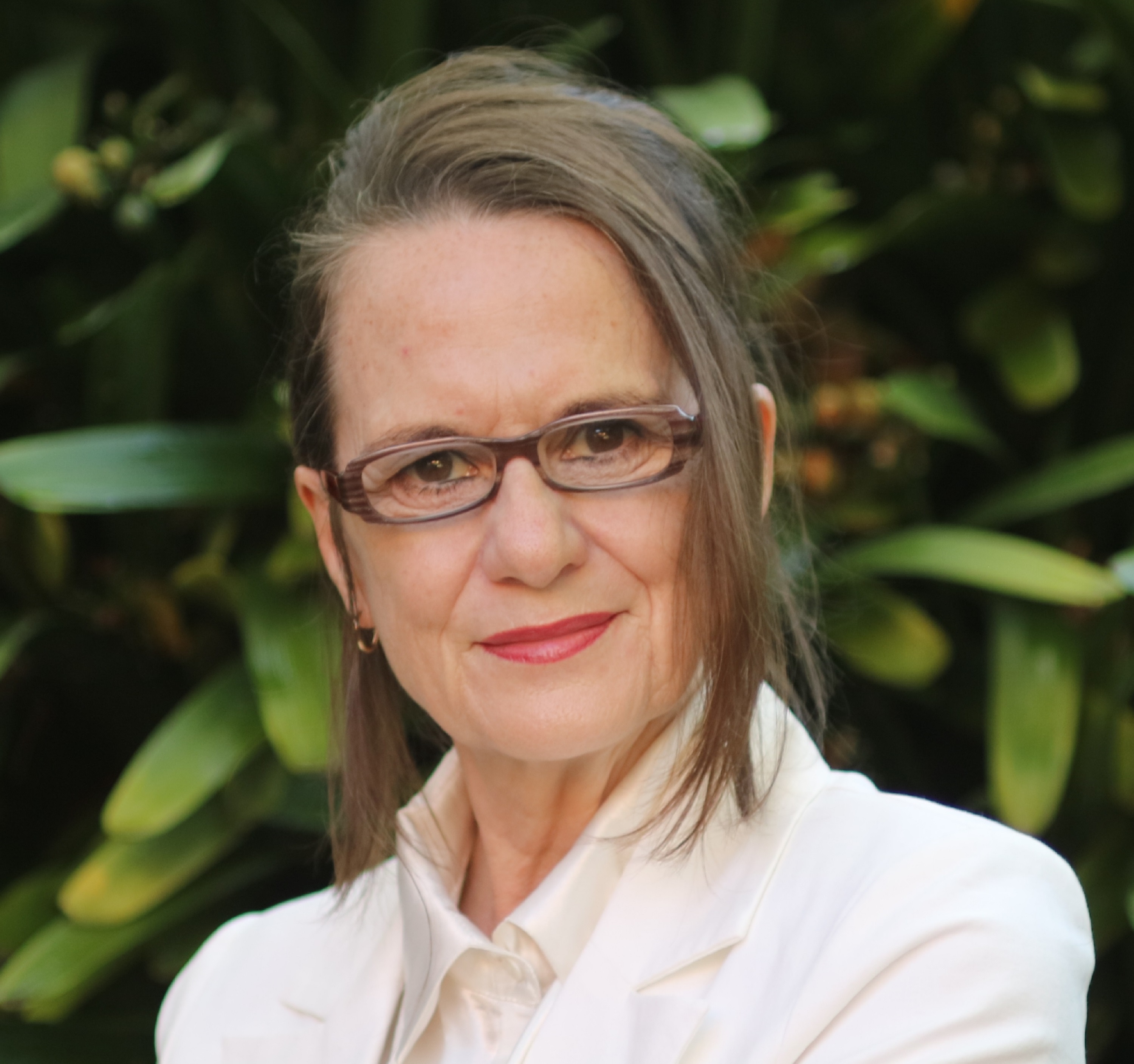
Jules F. B. Silva
Jules F. B. Silva is a psychotherapist in private practice in Melbourne, working with individuals and couples; with special interests in grief, loss, trauma (and addiction), and existential concerns. Jules' previous research, that culminated in her paper Therapists’ experience of climate change: A dialectic between personal and professional (published in the BACP journal Counselling and Psychotherapy Research in 2022), has led Jules toward a timely interest in Practitioner-led Research that she hopes will inform clinical practice in the world of now; at a time of collective grief, loss, and existential anxieties, as we (client and practitioner, alike) face into an increasingly unstable world of uncertain futures across multiple life domains.
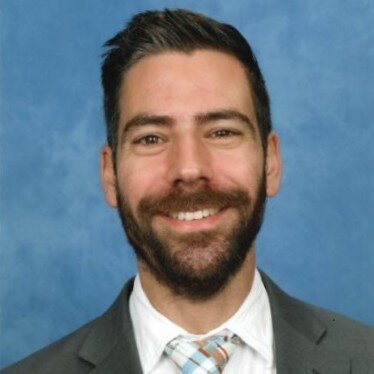
Alessandro Digiacomo
Alessandro Digiacomo is a dedicated school counsellor and former secondary school teacher with a deep passion for counselling and education. He has earned three Master’s degrees in Counselling & Psychotherapy, Teaching and Italian Teaching. With two academic publications in the fields of counselling and education, he is currently pursuing PhD research in school counselling. Alessandro's current research expands on his earlier work published in Cambridge’s Journal of Psychologists and Counsellors in Schools, where he also served as a peer reviewer. His doctoral study focuses on school counsellors' perspectives on working with secondary school students who experience social, emotional and behavioural difficulties. In addition to his research, Alessandro has served as an academic tutor in counselling at ACAP, where he focused on educating and mentoring the next generation of practitioners.
.png)
Dr Jim Schirmer
Jim Schirmer is an experienced counsellor, researcher and educator who lectures in the Master of Counselling Program at the University of Queensland. His background is in the humanities - specifically philosophy, ethics and theology - and maintains an interest in exploring the integration of these intellectual traditions within the theory and practice of psychotherapy. His doctoral research follows this trend in exploring ways to identify and develop virtues, strengths and values in the character of the counsellor which have potential to enhance the outcome of psychotherapy. He is the co-author of the open-access textbook, The Practice of Counselling and Psychotherapy (2025), along with a variety of other publications.